Prayagraj is where three sacred rivers meet — the Ganges, Yamuna, and the invisible Saraswati. A dip at the Triveni Sangam is believed to wash away all sins. Here is everything you need to know before visiting.
Prayagraj — The King of All Pilgrimages
Prayagraj (formerly Allahabad) holds a unique position in Hindu cosmology — it is Tirtharaja, the king of all pilgrimage sites. This is where the three holiest rivers of India converge: the Ganga, Yamuna, and the mythical Saraswati — the latter invisible, existing in the spiritual realm. Bathing at this confluence (Triveni Sangam) is believed to be the most powerful act of purification in all of Hindu dharma.
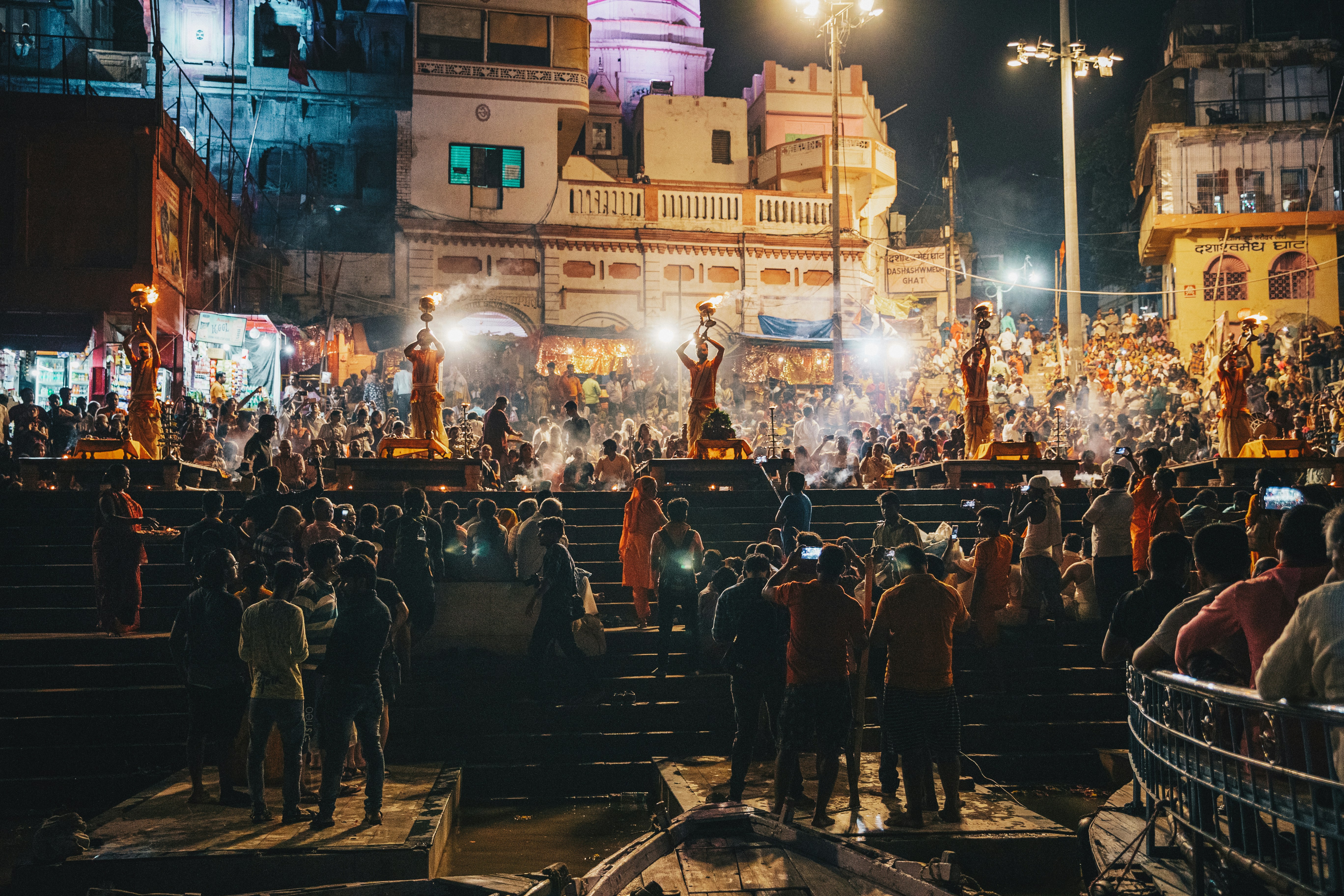
Every 12 years, the Mahakumbh Mela transforms this city into the largest peaceful gathering of human beings on earth. But even outside Kumbh, Prayagraj is a deeply meaningful place to visit — and it pairs perfectly with a Varanasi tour. Viraj Travels offers a combined Varanasi–Prayagraj package that is ideal for pilgrims and heritage travellers alike.
What Is the Triveni Sangam?
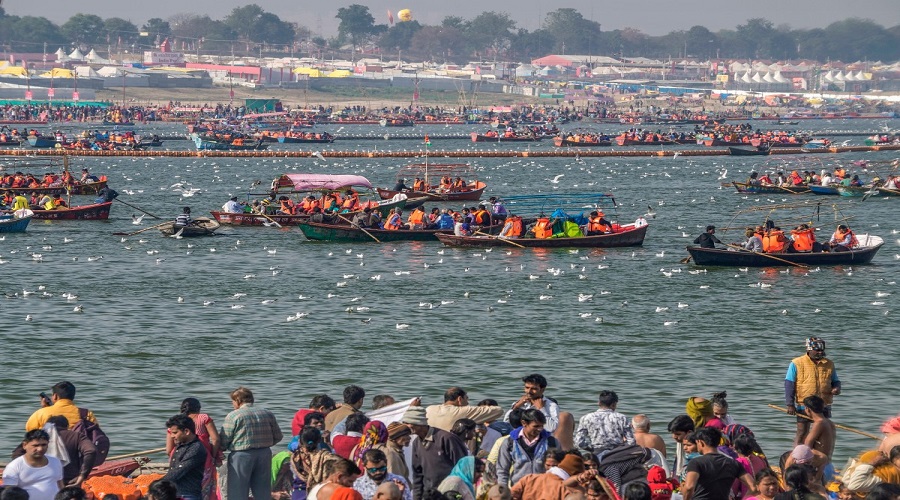
The Sangam is the physical confluence of the Ganga (turquoise-blue) and Yamuna (darker, greenish) rivers. You can clearly see the two colours merging at the point of confluence. The Saraswati is said to emerge underground at this exact spot. Pilgrims come here to:
- Take a holy dip (snan) — believed to wash away lifetimes of karmic debt
- Perform pitru tarpan — rituals to honour ancestors
- Release ashes of deceased loved ones into the sacred waters
- Simply sit and pray on the sandbars that appear in winter
How to Reach the Sangam
The Sangam point is accessible only by boat. Rowing boats (nao) depart from Sangam Ghat at Daraganj. The boat ride takes about 20–30 minutes to reach the actual confluence point.
- Hire a boat from government-authorised ghats (avoid touts)
- The boat ride costs approximately ₹200–400 per person for a group boat
- Morning visits (6–9 AM) are best — calm water, golden light, fewer crowds
Puja at the Sangam
Pandas (hereditary priests) at the Sangam have genealogical records (bahis) going back centuries — your ancestors may have visited Prayagraj before you. A full Sangam puja includes flowers, diyas, milk, sesame seeds, and holy water offering. Our packages include a dedicated priest who performs the puja properly, not a rushed tourist version.
Kumbh Mela — The World's Largest Gathering
The Mahakumbh Mela occurs every 12 years at Prayagraj. The next Mahakumbh was held in January–February 2025 and drew an estimated 400 million pilgrims. The Ardh Kumbh occurs every 6 years and the Kumbh every 12. The Shahi Snan (royal bath) on auspicious dates is the centrepiece, when millions bathe simultaneously at the Sangam.
Even if you miss a Kumbh year, Magh Mela — a month-long fair held every year in January–February — brings lakhs of pilgrims to the Sangam.
What Else to See in Prayagraj
Allahabad Fort (Akbar's Fort)
Built by Emperor Akbar in 1583, this massive fort at the Sangam confluence is one of the largest in India. The fort contains the Akshayavat (immortal banyan tree) and the Patalpuri Temple — both considered ancient beyond measure. Parts of the fort are managed by the army, but the heritage section is open to visitors.
Anand Bhawan — Nehru Family Heritage
The ancestral home of India's first Prime Minister Jawaharlal Nehru, now a national museum. The house is beautifully preserved and offers fascinating insights into the Indian independence movement. The adjacent Swaraj Bhawan (the older family home) is also part of the museum complex.
Khusrau Bagh
A Mughal-era walled garden containing the ornate tombs of Prince Khusrau (son of Emperor Jahangir), his mother, and sister. The tombs are remarkable examples of Mughal funerary architecture and the garden is surprisingly peaceful — a good contrast to the crowded Sangam area.
Alopi Devi Mandir
A unique temple where instead of an idol, a doli (palanquin) is worshipped — believed to be the spot where the last fragment of Goddess Sati's body fell. One of the Shakti Peethas of India.
Varanasi to Prayagraj — How to Travel
Prayagraj is 120 km from Varanasi — approximately 2.5 to 3 hours by road on NH19. It makes a perfect day trip from Varanasi, or a 2-day extension.
- By cab (best): Viraj Travels operates comfortable AC cars on this route. Book a round-trip cab with a local guide.
- By train: Regular trains between Varanasi and Prayagraj Junction. Journey: 1.5–2.5 hours.
Best Time to Visit
October to February is ideal. Winter months see the Magh Mela, and the sandbars at the Sangam are fully visible. Avoid monsoon months when the Sangam area can flood significantly.
Book Varanasi + Prayagraj Tour
Our Varanasi–Prayagraj Tour (5 days, 4 nights) covers Kashi Vishwanath, Ganga Aarti, Triveni Sangam boat ride and puja, Allahabad Fort, and Anand Bhawan — fully guided, with hotel and cab included. A deeply meaningful pilgrimage and heritage journey through the heart of Uttar Pradesh.